

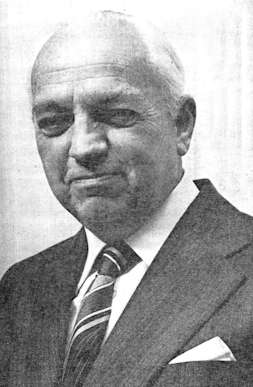
 Malcolm Rae (18 January 1913 – 22 March 1979) became interested in alternative medicine as a young man when he had been ‘written off’ by his allopathic doctors.
Malcolm Rae ALLEGEDLY joined the Fleet Air Arm and became a Commander in WWII.
Malcolm Rae and others took the work of Albert Abrams and, over fifteen years of research, working closely with doctors so he could clinically test each step, and combining his knowledge of homeopathy and radionics, Malcolm Rae built a number of radionics machines before eventually developing his geomagnetic potentiser.
Malcolm Rae was a student of Donald MacDonald Foubister and Farley Spink, and a colleague of Elvia Bury, John DaMonte, George De la Warr, Ruth Drown, William (Bill) Fletcher, Thomas Galen Hieronymus, George Laurence, Tad Mann, Guyon Richards, Rosemary Russell, David V. Tansley, Vernon Wethered, Jane Wilcox.
Radionics had an important influence on homeopathy and there are strong parallels between the two because many of the founders and practitioners of radionics were [and are] lay people e.g. George de la Warr, Aubrey Westlake, Vernon Wethered, Jane [Orr] Wilcox (1922 – 2000), Rosemary Russell, John DaMonte, [Aymee] Lavender Dower and Edith Eden.
They also exerted an important influence from 1940-1970 upon the lay homeopathic movement because many of the figures involved were the same and mixed together. Also they shared the same remedies and often shared the same social scene.
Homeopathy influenced radionics much more than the reverse, but nevertheless, they had a generally beneficial and benign influence on each other. Basically, radionics or radiesthesia depends very largely upon the dowsing, Aubrey Westlake [c.1895-c.1980], David V Tansley, George de la Warr [d.1969], Malcolm Rae [d.1978/9] and George Laurence [c.1880-c.1970], who were mainly prominent in the Radionics Association, but who nevertheless had a strong influence upon lay practice of homeopathy.
An electronic engineer and dowser who later took a great interest in the development of radionic instruments [see Hill, 1979, pp.28, 160, 167]. Malcolm Rae is connected with George de la Warre, John DaMonte, et al.
He was born near Manchester, associated with Wethered, Laurence, De La Warr, Westlake, etc., dowser, Psionic and radionic practitioner, but is chiefly revered for inventing a ‘geomagnetic potentiser’ using patterns printed on cards.
He learned homeopathy from Farley Spink and Donald MacDonald Foubister, [Obituary Rad. Quart 25:3, June 1979]: “born 1913 near Manchester… in his twenties due to ill health, he became interested in unorthodox medicines and diets… had been ‘written off’ by the medical profession..”[Obituary, 1979]
However, he achieved an acceptable level of health and joined the Fleet Air Arm in 1940 serving with Captain Atkinson in WW2, who was married to Jean Atkinson the homeopath. Malcolm and Captain Atkinson talked about homeopathy and he remembered that in 1958 when he became ill with hypertension and was diagnosed as having kidney stones. Using homeopathy alone, with the help of Farley Spink, Malcolm eliminated the stones and returned to work immediately. Two years later he was diagnosed as having gallstones and again using homeopathy he was able to eliminate them [p.18 of ‘Homeopathy In Relation to Radionics’, Radionic Quarterly, 33:1 Dec. 1986].
Magneto Geometry was developed by Malcolm Rae, one of a group of pioneering Doctors, Homoeopaths and Radionic researchers working in Britain from the 1940s through to the 1980s. This group included Dr. George Laurence, founder of the Psionic Medical Association; George de la Warr; Dr Aubrey Westlake; Dr Guyon Richards; John DaMonte; David V Tansley, and other notables.
Rae himself had a distinguished career in the Royal Navy, where he rose to the rank of Commander during World War II. While in the Navy he was introduced to the ideas of Radionics by a Captain Atkinson. Although he rejected Radionics at the time, he later became interested in it during the 1950s and carried on to develop remarkable new techniques and instruments.
At first Rae worked with ‘conventional’ Radionic instruments, derived from the work of Albert Abrams and Drown. These instruments coded the vibrational quality of a selected substance in terms of a chain of numbers – Diamond, for example, is 442337.
By dowsing round a circle Rae discovered that distinct pendulum reactions are obtained at certain angular relations to the earth’s magnetic field. These are marked within the
circle as radial lines.
The resolution of each line is to one degree of arc. The result is a system of cards… There are currently more than 25,000 cards in the MGA system.
Malcolm Rae, a British electronic engineer, developed Drown’s concept further and in the 1960’s initiated the commercial manufacturing of homeopathic remedy makers (radionic potentisers).
Potentisers evolved significantly during the last two decades and at present days thousands of homeopaths and therapists from a wide range of disciplines all over the world are using homeopathic potentisers for preparing their vibrational remedies.
In 1972, Rae delivered a paper titled “Radiesthesia and Thought” to the Medical Society for the Study of Radiesthesia.
Malcolm Rae died on 22 March 1979
Select Publications:
- Dimensions of Radionics: A Manual of Radionic Theory and Practice for the Health care Professional with David V Tansley and Aubrey T Westlake,
- Dimensions of Radionics: Techniques of Instrumented Distant Healing with David V Tansley, David Foster, Aubrey T Westlake,
- The Radiesthetic (or Dowsing) Faculty: Two Lectures on the Role, Scope and Limitations of the Faculty in the Modern World with Aubrey T Westlake
Of interest:
John Malcolm Rae (1931 – 2006) [no evident relation], son of London radiologist Dr. L. John Rae, was an educator, public figure, writer and, from 1970 to 1986, headmaster of the Westminster School.
Good article! Are you aware of whether these cards are still available for purchase, and how one connects with the provider?
https://www.magnetogeometrics.co.uk/
Nick Franks
http://www.radionics.co.uk
Thank you Nick!
Hi D L Lamb
A quick check on google and – no, they do not seem to be available, though there is some suggestion that the Malcolm Rae Association have them, but they do not appear to have a web site – sorry!
Sue
Yes these cards are available to buy from London Email: [email protected]
Ph: +44 208 461 5253
Like your first reply, contact with the provider.
I bought 2 of these instruments in 1981, the potentiser and the card potentiser.
I have used the potentiser extensively in my practice and in fact have at times left the magnet switched on for sundry days. It still works. My query is to what extent would overuse and misuse have weakened it, and if so can it’s full finction be restored.
I had a dramatic effect with the card machine, being highly sceptical at the time. After 3 weeks travel, airline food, and constipation I made up the colon Rx, at a conference inAmerica at the time. It gave me an intense throat (my weak point) inflammation for 24 hrs, cleared dramatically and left me so highly energised I was virtually leaping over the volley ball net, being 50 at the time and leaving my juniors for dead. I don’t recall any drama with the bowels., (if anyone wants to know).
Derek,
I am in America and seeking a set of Rae cards or copies for a client. Would you be able to help? Thanks, David
I purchased a rae potentiser 20 years ago but unfortunately my car was stolen and it was in it along with all my cards etc never to be seen again. Ive been searching the net trying to find someone that sells them can you help me??
looking to purchase a potentiser that takes this card system, my machine has started to let me down. or can anyone recommend a good brand of potentiser.
cheers kev
I have a great selection of instruments and I have been using them since 1990 and they are still in use today. Even though I have tried many other devices the best and most successful results came from the MGA instruments!
The Address is Magneto Geometric Applications, 45, Dowanhill Road, Catford, London SE6 1SX, England. Email: [email protected]
Telephone: +44 208 461 5253
please give card nos of swamy narayani C remedies and Sanjeevinis prepartion I have all the card nos except above medicines
I just acquired a potentizer and some cards. Could someone recommend where to find instructions on how to put it together and use it?
Thanks!